


Construction AI Use Cases are transforming how Australian trades and construction businesses work, from boosting productivity to improving safety and client communication. Explore how AI technologies are transforming Australia’s construction and trades sector, streamlining operations, improving client experience, elevating safety standards, and securing digital workflows. These Construction AI Use Cases demonstrate how modern tools can dramatically improve efficiency, safety, and communication across every stage of a project.

Table of Contents
Enhance Operations With Construction AI Use Cases
Streamline job delivery, improve cost control, and boost site productivity. Many Construction AI Use Cases directly support operational stability by reducing manual workload and helping teams coordinate tasks more effectively.
Elevate Customer Experience
Deliver transparency, responsiveness, and personalised service throughout the project lifecycle.
These Construction AI Use Cases also enhance job site reliability by giving teams real-time insights into potential risks and emerging safety issues.
Improve Health & Safety Using Construction AI Use Cases
Move from reactive safety management to proactive risk prevention.
Secure Digital Assets
Safeguard sensitive documentation, contracts, and compliance records.
Key Business Outcomes
Future-Proofing Construction Businesses With AI
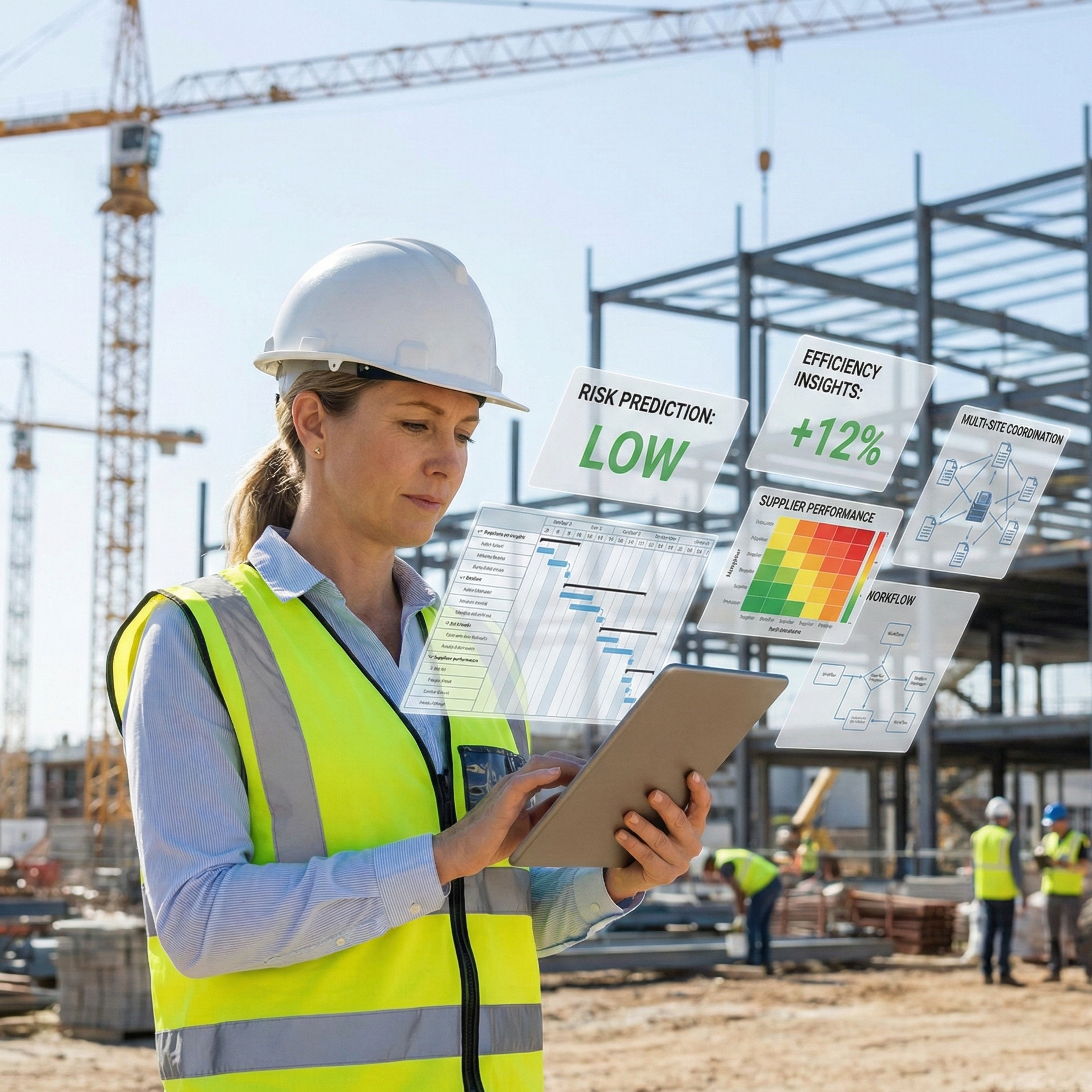
As the construction and trades sector continues to digitalise, AI is becoming a core driver of long-term stability and growth. Research from Oracle Construction Intelligence highlights how AI is rapidly transforming the way construction businesses operate, particularly in areas like risk prediction, workflow automation, and efficiency gains. Many Australian businesses now operate across multiple sites, manage subcontractors, and handle large volumes of documentation, AI brings all these moving parts together.
By centralising data and turning it into meaningful insights, teams can identify patterns such as recurring delays, unreliable suppliers, cost anomalies, or inefficient sequencing. This type of visibility isn’t possible with manual processes, and it allows leaders to plan projects with far greater confidence.
From Reactive Workflows to Proactive Project Planning
Traditional construction workflows often involve fixing problems only after they appear. Equipment fails, schedules clash, approvals stall, or materials arrive late and teams scramble to catch up. AI flips this model. With predictive insights and automated monitoring, businesses can anticipate issues well before they escalate.
AI can forecast weather-related interruptions, highlight subcontractors falling behind, detect safety risks early, and recommend better task sequencing. This shift from reacting to planning ahead results in smoother builds, fewer budget surprises, and more reliable handovers for clients.
Scaling Operations Without Increasing Overhead
One of the biggest advantages of AI is how it supports growth. Smaller and mid-sized construction companies often feel the strain when taking on extra work or expanding into new regions. AI eases that pressure by reducing admin, standardising documentation, automating communication, and creating consistent processes across all job sites.
This means businesses can scale without sacrificing quality or overloading their teams. Companies that embrace AI now will be in the strongest position to compete, win more tenders, and deliver projects faster and more predictably as the industry evolves.
Across the entire sector, Construction AI Use Cases continue to expand as new tools help builders reduce delays, manage risk, and deliver higher-quality outcomes with fewer resources.
Final Thoughts: Why Construction AI Use Cases Matter Now
AI isn’t a futuristic concept anymore, it’s already reshaping how Australian construction and trade businesses operate day to day. From improving quoting accuracy and reducing downtime to enhancing safety and strengthening client communication, AI delivers measurable improvements across the entire project lifecycle.
The companies that move early will build smarter, operate more efficiently, and gain a competitive advantage as digital expectations continue to rise across the industry. For construction teams looking to modernise, the path forward doesn’t require replacing existing systems. It starts with small, practical AI tools that streamline admin, automate documentation, and give teams clearer visibility over every job.
Over time, these improvements compound, creating a more predictable, scalable, and resilient operation. If your construction business is exploring how to adopt AI effectively, our AI Strategy & Advisory service provides step-by-step guidance on where to start. As market pressures grow and margins tighten, AI becomes less of a nice-to-have and more of an essential component of running a modern construction business.
Turn Your Data Into a Competitive Advantage
The data gap is growing, and businesses that fail to act are falling behind their competitors. You have the scale, speed, and agility to fix this now, before it becomes unmanageable. If you want a clear, practical, jargon-free path to turn your data into a strategic advantage, let’s talk.
Book a no-obligation Discovery Call with Steve Morris. We’ll listen to your challenges, analyse your business, and help you build a roadmap toward true data clarity. If you’re considering this for your organisation, our AI consulting services outline how we help businesses adopt automation with minimal disruption.