
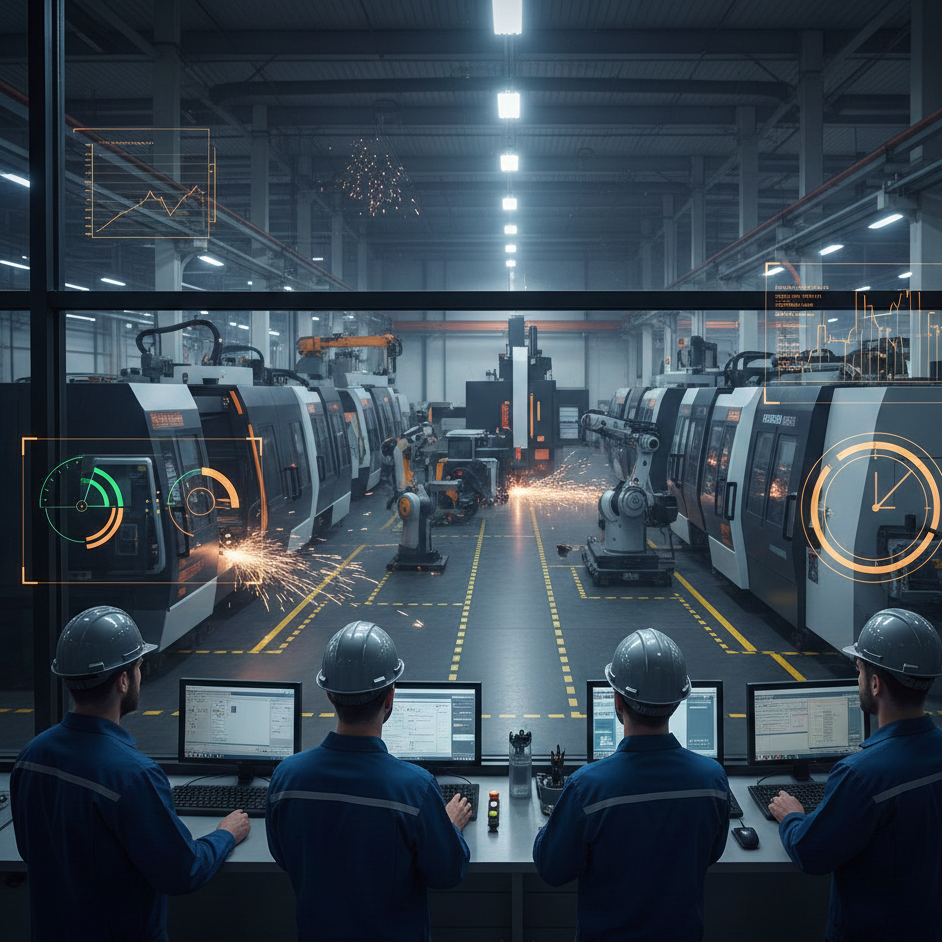

Manufacturing AI use cases are rapidly transforming how Australian manufacturers operate, compete, and scale. Across production facilities, warehouses, and supply chains, artificial intelligence is shifting manufacturing from reactive problem solving to proactive, data driven decision making.
Australian manufacturers are facing sustained pressure from rising input costs, labour shortages, tighter margins, and increasing customer expectations around speed, quality, and customisation. At the same time, regulatory requirements and sustainability targets are becoming more demanding. Traditional manufacturing systems and manual processes are no longer sufficient to keep pace with these challenges.
AI provides a practical and proven pathway forward. By embedding intelligence into production planning, quality control, maintenance, and customer engagement, manufacturers can improve efficiency, reduce risk, and deliver more consistent outcomes. This article explores the most impactful manufacturing AI use cases and how they are reshaping modern manufacturing operations across Australia.

Table of Contents
Optimise Production and Operations with Manufacturing AI Use Cases
Operational efficiency sits at the core of manufacturing performance. Even small inefficiencies in scheduling, maintenance, or energy use can result in significant cost overruns and lost output.
Manufacturing AI use cases enable smarter production scheduling and shift planning by analysing order volumes, workforce availability, machine capacity, and inventory levels in real time. AI systems dynamically adjust schedules to minimise bottlenecks, balance workloads, and improve throughput across the shop floor.
Predictive analytics plays a critical role in equipment reliability. By continuously monitoring machine sensor data, vibration patterns, temperature readings, and historical maintenance records, AI models can forecast maintenance needs before failures occur. This reduces unplanned downtime, extends asset life, and lowers maintenance costs.
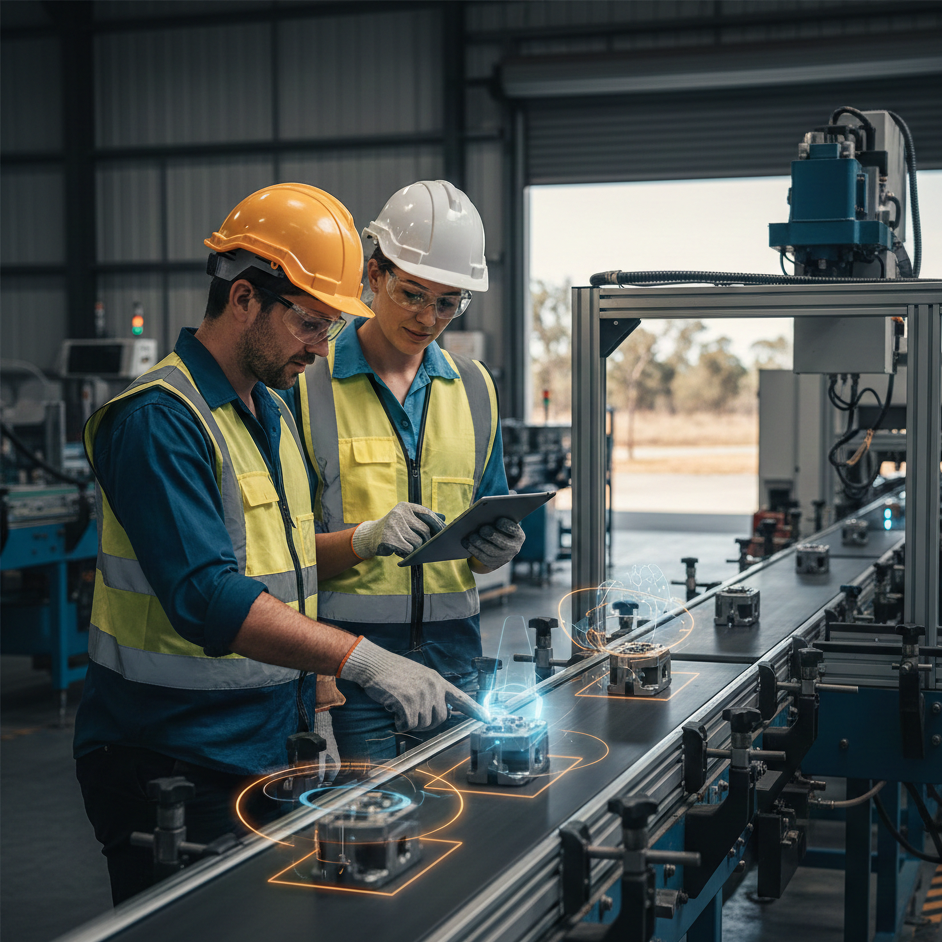
AI driven quality control systems further enhance operational performance. Using computer vision, sensors, and machine learning models, AI can inspect products in real time to detect defects, inconsistencies, or deviations from specification. This improves quality consistency while reducing scrap, rework, and material waste.
Generative AI also supports operational documentation. Manufacturers can use AI to draft standard operating procedures, maintenance checklists, safety documentation, and training materials based on existing processes and best practice templates. This ensures documentation remains consistent, current, and accessible across teams.
Energy optimisation is another high impact manufacturing AI use case. Machine learning models analyse historical consumption patterns and real time sensor data to optimise energy usage across facilities. This supports sustainability goals while delivering measurable cost savings.
Elevate Customer Experience Using Manufacturing AI Use Cases
Customer expectations in manufacturing continue to evolve. Buyers increasingly demand faster lead times, transparent pricing, and greater product customisation.
Manufacturing AI use cases enable more accurate and responsive quoting processes. AI powered quoting tools generate cost estimates and lead times based on bills of materials, labour availability, machine capacity, and current workloads. This improves speed, accuracy, and confidence during the sales process.
Generative AI improves customer communication by producing tailored updates, production timelines, and order status reports. These updates can be automatically generated and adjusted as production conditions change, helping build trust and reduce uncertainty.
Recommendation engines allow manufacturers to offer intelligent product customisation. By analysing customer order history, specifications, and preferences, AI can suggest compatible components, upgrades, or configuration options that add value without increasing complexity.
Natural language processing enhances service responsiveness by analysing customer feedback across emails, support tickets, and reviews. AI identifies recurring issues, sentiment trends, and service gaps, enabling teams to respond faster and improve customer experience proactively.
AI driven logistics integration automates order tracking and delivery notifications. Customers receive real time updates without manual follow up, reducing inbound enquiries and improving overall satisfaction.
Improve Quality and Risk Management with Manufacturing AI Use Cases
Quality assurance and risk management are critical priorities in manufacturing, particularly in regulated or safety sensitive industries.
Manufacturing AI use cases strengthen quality control by enabling continuous, automated inspection during production. Vision systems identify defects, anomalies, or tolerance issues as they occur, allowing immediate corrective action rather than post production discovery.
Predictive models also help manufacturers detect early warning signals across the supply chain. AI can flag potential disruptions, raw material inconsistencies, or supplier performance issues before they impact production schedules.
Machine learning supports root cause analysis by identifying patterns across downtime events, defects, and production anomalies. This helps manufacturers address systemic issues rather than treating isolated incidents.
Generative AI reduces administrative burden by automating compliance reporting, traceability documentation, and audit preparation. This improves consistency while reducing the time required to meet regulatory and customer requirements.
AI driven supplier performance tracking further strengthens quality outcomes. By monitoring metrics such as lead times, defect rates, and specification compliance, manufacturers can hold suppliers accountable and improve sourcing decisions.
Secure Digital Operations with Manufacturing AI Use Cases
As manufacturing environments become more connected, protecting digital systems and intellectual property is essential.
Manufacturing AI use cases play a key role in cybersecurity by detecting anomalies in network traffic, system behaviour, and access patterns. AI driven threat detection systems isolate risks before they disrupt production or compromise sensitive data.
Intelligent access controls restrict system usage based on role, location, and time. This reduces the risk of unauthorised changes to production settings or critical infrastructure.
AI also automates encryption and secure storage of design files, operational data, and IoT sensor inputs. This improves data governance and reduces exposure to cyber threats.
Anomaly detection across ERP, MES, and SCADA systems helps maintain operational integrity by identifying unusual behaviour that may indicate errors, misuse, or security incidents.
Generative AI further protects intellectual property by automatically redacting sensitive information from shared documents, drawings, or specifications used in external communications.
Strengthen Workforce Capability and Training with AI
Beyond automation, manufacturing AI use cases also support workforce development.
AI driven training platforms personalise learning pathways based on role, skill level, and operational requirements. This ensures staff receive relevant training without unnecessary downtime.
Generative AI assists with onboarding by creating role specific training materials, safety briefings, and operational guides. This speeds up knowledge transfer and improves consistency across sites.
AI analytics also identify skill gaps by analysing performance data and incident trends, helping manufacturers proactively upskill their workforce.
Enable Data Driven Decision Making Across Manufacturing
One of the most strategic manufacturing AI use cases is improved decision making.
By consolidating data across production systems, supply chains, quality platforms, and customer channels, AI creates a single source of truth for manufacturing leaders. Predictive insights help executives model scenarios, assess risk, and plan capacity with greater confidence.
This data driven approach enables manufacturers to move from reactive firefighting to proactive optimisation.
Key Business Outcomes of Manufacturing AI Use Cases
When implemented effectively, manufacturing AI use cases deliver measurable benefits:
- Significant reduction in unplanned downtime through predictive maintenance
- Improved product quality with real time inspection and defect detection
- Faster and more accurate quoting and lead time forecasting
- Reduced operational risk through predictive alerts and compliance automation
- Stronger protection of intellectual property and production data
Final Thoughts: Why Manufacturing AI Use Cases Matter Now
Manufacturing AI use cases are no longer a future concept or a nice to have initiative. At a strategic level, AI is becoming essential to long term competitiveness, operational resilience, and sustainable production across Australian manufacturing. It is already reshaping how manufacturers plan and schedule production, maintain critical assets, manage quality, and respond to customer demand. As manufacturers face rising input costs, workforce constraints, supply chain volatility, and tighter compliance requirements, traditional manual processes and disconnected systems are becoming increasingly unsustainable. AI offers a practical and proven way to reduce inefficiency, improve operational visibility, and enable smarter, faster decision making across the factory floor and beyond.
Manufacturers that adopt manufacturing AI use cases early gain a meaningful advantage. From improved equipment uptime and more consistent product quality to predictive risk management and faster response to disruptions, AI supports stronger outcomes across both operational execution and strategic planning. As margins tighten and expectations around safety, traceability, and sustainability increase, AI enables manufacturing organisations to operate with greater speed, accuracy, and control while maintaining high standards of compliance and reliability. For manufacturing leaders ready to modernise their operations and systems, the opportunity to deliver measurable performance improvement is significant and achievable.
If your organisation is exploring how to adopt manufacturing AI use cases without disrupting day to day production, our AI Strategy and Advisory services provide a clear, practical roadmap tailored to manufacturing transformation. We work with manufacturers to assess current processes and systems, identify high impact AI opportunities, and prioritise initiatives that deliver measurable outcomes within the first 90 days. If you are considering automation or intelligence led manufacturing, our AI consulting services outline exactly how we help manufacturers improve productivity, strengthen quality and risk controls, and scale operations with minimal disruption to people, processes, and production lines.